• Link to Facebook
  • Link to Instagram
  • Link to LinkedIn
  • Link to Youtube
  • Link to X
Call Us Today! 512-640-5750
Data Architect as a Service | Remote DBA Services
  • Services
    • Analytics Architecture
    • Database Architecture
    • Software Architecture
    • Microsoft Fabric Consulting
      • Microsoft Fabric Health Check
  • About Us
    • Testimonials
    • Recommendation Program
    • Jobs
      • Data Engineering Consultant
      • Principal Data Analytics Architect
  • Resources
    • Blog
    • Videos
  • Contact
  • Click to open the search input field Click to open the search input field Search
  • Menu Menu

Free SQL Data Compare

Data Architecture

I am a consultant in Austin who can help make your data go fast, be secure and highly available. When I am engaged in a performance tuning project priority #1 isn’t to make sure your data go faster. Priority #1 is to make sure we get the same result sets while making your data go faster.

Free SQL Data Compare with T-SQL?

There are several tools out there that can be used to compare data. Today, I want to share how you can quickly do this on your own with T-SQL!

Let’s simplify the process. Our goal is to check two temp tables and validate if any of the data is different. This would include inserts, updates, and deletes. For this example, I will just do a dump of Sales.SalesOrderDetail in AdventureWorks into two temp tables as shown below.

SELECT * INTO #Tmp1
FROM Sales.SalesOrderDetail SELECT * INTO #Tmp2
FROM Sales.SalesOrderDetail

Now we shouldn’t see any differences since we used the same table to create both temp tables. We are going to use two different SQL operators to compare these two temp tables while applying some data changes. We will focus on the UNION ALL and EXCEPT operators.

The Power of EXCEPT

Except is an underrated and underused SQL operation. In a nutshell, it will give you the results of the first query that are different from the next query. So, if the data of any column in #tmp1 is different from #tmp2 or if the row doesn’t exist in #tmp2 but is in #tmp1 it will get returned.

SELECT * FROM #Tmp1
EXCEPT SELECT * FROM #Tmp2

Let’s go ahead and modify a column in #Tmp1 so you can see how this works. We are going to set OrderQty to five when SalesOrderId is 45313 and SalesOrderDetailId is 6210. This will change just one column in one row. We will then select these columns from both temp tables to see the change.

This is how most people would start using T-SQL to identify changes in data.

UPDATE #Tmp1 SET OrderQty = 5 WHERE SalesOrderID = 45313 AND SalesOrderDetailID = 6210 SELECT SalesOrderId, SalesOrderDetailID, OrderQty FROM #Tmp1 WHERE SalesOrderID = 45313 AND SalesOrderDetailID = 6210 SELECT SalesOrderId, SalesOrderDetailID, OrderQty FROM #Tmp2 WHERE SalesOrderID = 45313 AND SalesOrderDetailID = 6210 
Data Compare is easy when we know what changed.
Data Compare is easy when we know what changed and not much changed. Just select it..
Data Compare is easy when we know what changed. Data Compare is easy when we know what changed and not much changed. Just select it..

Finding Data Changes The Easy Way

Selecting the two tables is easy if we know what change occurred and there aren’t many changes. This can get complicated quickly. Therefore, if we just want to quickly know if we have differences lets take a look at my goto method using EXCEPT. To make this example easier to read instead of using “SELECT *” I will just focus on columns that are changing. In a real example, I would want to know if any columns changed.

SELECT SalesOrderId, SalesOrderDetailID, OrderQty FROM #Tmp1
EXCEPT SELECT SalesOrderId, SalesOrderDetailID, OrderQty FROM #Tmp2

Data Compare using EXCEPT quickly lets us see that we had a data change

If an insert or a column change occurs in #tmp1 we will see it in our EXCEPT SQL statement. This isn’t true if the change is only in #tmp2.

For example, an insert in #tmp2 or delete in #tmp1 would not be shown. To see this we would have to switch the temp tables in the EXCEPT clause as shown below.

INSERT INTO #tmp2 (SalesOrderId, ProductID, SpecialOfferID, OrderQty, UnitPrice, UnitPriceDiscount,LineTotal, rowguid, ModifiedDate)
VALUES (45313, 1, 3, 1,1.25,0,
1.25*1, NEWID(), GETDATE()) DELETE FROM #Tmp1
WHERE SalesOrderID = 45313 AND SalesOrderDetailID = 6211 SELECT SalesOrderId, SalesOrderDetailID, OrderQty FROM #Tmp1
EXCEPT SELECT SalesOrderId, SalesOrderDetailID, OrderQty FROM #Tmp2
/* We will now see our insert and delete */
SELECT SalesOrderId, SalesOrderDetailID, OrderQty FROM #Tmp2
EXCEPT SELECT SalesOrderId, SalesOrderDetailID, OrderQty FROM #Tmp1

Our first EXEMPT clause only shows the update that occurred in #tmp1. The delete in #tmp1 and insert in #tmp2 cannot be seen because the data doesn't exist in #tmp1.
Our first EXEMPT clause only shows the update that occurred in #tmp1. The delete in #tmp1 and insert in #tmp2 cannot be seen because the data doesn’t exist in #tmp1.
Our Second EXEMPT shows the insert in #tmp2, delete in #tmp1 and update on #tmp1 because the column is different on #tmp2

Our first except shows us data in #tmp1 that is not in #tmp2 because the OrderQty column changed in #tmp1. The second EXCEPT shows us data in #tmp2 that isn’t in #tmp1 because of our insert into #tmp2 and also our delete from #tmp1 would be found in #tmp2 but not #tmp1.

UNION ALL for the Win!

To wrap this up now we can include a UNION ALL operation between the two EXCEPT operations. This would get us any data changes to the columns selected from the temp tables.

SELECT SalesOrderId, SalesOrderDetailID, OrderQty FROM #Tmp1
EXCEPT SELECT SalesOrderId, SalesOrderDetailID, OrderQty FROM #Tmp2
UNION ALL
SELECT SalesOrderId, SalesOrderDetailID, OrderQty FROM #Tmp2
EXCEPT SELECT SalesOrderId, SalesOrderDetailID, OrderQty FROM #Tmp1
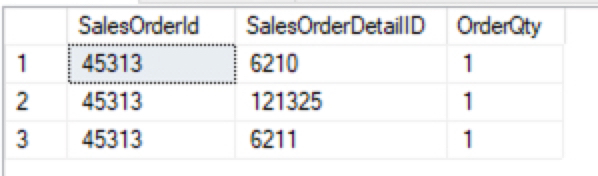
UNION ALL and EXCEPT for the free Data Compare Win! Quickly shows rows that are different between the two tables.

Typically, I need to verify is the data before and after is the same. This is a quick and easy way to get that answer. Now I know you might want to take this to the next level. You might be thinking how do I just get the unique key for the table and columns that changed. I will leave that as an exercise for you.

If you enjoyed this post subscribe to get more free SQL tips.

Subscribe for Free Tips

The post Free SQL Data Compare appeared first on SQL Server Consulting & Remote DBA Service.

April 20, 2020/by John Sterrett
/wp-content/uploads/2024/05/Data-Architecture-as-a-Service-with-ProcureSQL.png 0 0 John Sterrett /wp-content/uploads/2024/05/Data-Architecture-as-a-Service-with-ProcureSQL.png John Sterrett2020-04-20 18:00:552020-04-20 18:00:55Free SQL Data Compare
Join Our Newsletter
  Thank you for Signing Up
Please correct the marked field(s) below.
1,true,6,Contact Email,21,false,1,First Name,21,false,1,Last Name,2
Search Search

Blog Categories

  • $150 Challenge
  • Advice
  • Announcements
  • Artificial Intelligence
  • Awards
  • Azure Data Factory
  • C-Level
  • Cloud
  • Community
  • Conferences
  • Data Architecture
  • Data Integration
  • Data Intergration
  • Data Visualization
  • Data Warehousing
  • DBA 101
  • Design
  • Disaster Recovery or High Availability
  • Education
  • Fabric Dev Ops
  • Fabric Lakehouse
  • Fabric Lakehouses
  • Fabric Mirroring
  • Fabric Notebooks
  • Features
  • General
  • Health Checks
  • Lab
  • Microsoft Fabric
  • Microsoft Technologies
  • Newsletter
  • Performance Tuning
  • Power BI
  • ProcureSQL
  • Python
  • Reporting
  • Security
  • SQL Server
  • SQL Server
  • sql server 101
  • SQLServerPedia Syndication
  • syndication
  • The Blog
  • Uncategorized
  • Visual Studio Credit

Tags

#SQLFamily automatic tuning availability group azure backup Backups career Data Governance Data Loss Data Platform DBA Denver Differential Backup Disaster Recovery Fabric Fabric Architecture Full Backup High Availability Houston Marketing Database Administrator Microsoft Microsoft Fabric Microsoft SQL Server mirroring parameter sniffing PASS performance tuning Professional Development query store Recovery Recovery Model Restores Security SQL Saturday SQL Server SQL Server 2017 sql server 2019 SQL Server 2022 sql server 2025 SSMS System Databases Transaction Log Backup tsqltuesday Tuning Wait Stats

Archives

  • September 2026
  • August 2026
  • July 2026
  • June 2026
  • May 2026
  • April 2026
  • March 2026
  • February 2026
  • November 2025
  • October 2025
  • September 2025
  • July 2025
  • June 2025
  • May 2025
  • April 2025
  • March 2025
  • January 2025
  • December 2024
  • November 2024
  • October 2024
  • September 2024
  • August 2024
  • July 2024
  • June 2024
  • May 2024
  • February 2024
  • January 2024
  • November 2023
  • October 2023
  • March 2023
  • January 2023
  • May 2022
  • April 2022
  • November 2021
  • September 2020
  • August 2020
  • April 2020
  • March 2020
  • February 2020
  • January 2020
  • December 2019
  • November 2019
  • September 2019
  • July 2019
  • April 2019
  • November 2018
  • September 2018
  • August 2018
  • July 2018
  • June 2018
  • May 2018
  • April 2018
  • March 2018
  • February 2018
  • January 2018
  • November 2017
  • October 2017
  • August 2017
  • July 2017
  • June 2017
  • April 2017
  • December 2016
  • November 2016
  • October 2016
  • July 2016
© Copyright 2026 - ProcureSQL - 1464 East Whitestone Blvd., Suite 1902 Cedar Park, TX 78613, USA
  • Link to Facebook
  • Link to Instagram
  • Link to LinkedIn
  • Link to Youtube
  • Link to X
Scroll to top Scroll to top Scroll to top
Manage Consent
To provide the best experiences, we use technologies like cookies to store and/or access device information. Consenting to these technologies will allow us to process data such as browsing behavior or unique IDs on this site. Not consenting or withdrawing consent, may adversely affect certain features and functions.
Functional Always active
The technical storage or access is strictly necessary for the legitimate purpose of enabling the use of a specific service explicitly requested by the subscriber or user, or for the sole purpose of carrying out the transmission of a communication over an electronic communications network.
Preferences
The technical storage or access is necessary for the legitimate purpose of storing preferences that are not requested by the subscriber or user.
Statistics
The technical storage or access that is used exclusively for statistical purposes. The technical storage or access that is used exclusively for anonymous statistical purposes. Without a subpoena, voluntary compliance on the part of your Internet Service Provider, or additional records from a third party, information stored or retrieved for this purpose alone cannot usually be used to identify you.
Marketing
The technical storage or access is required to create user profiles to send advertising, or to track the user on a website or across several websites for similar marketing purposes.
  • Manage options
  • Manage services
  • Manage {vendor_count} vendors
  • Read more about these purposes
View preferences
  • {title}
  • {title}
  • {title}